
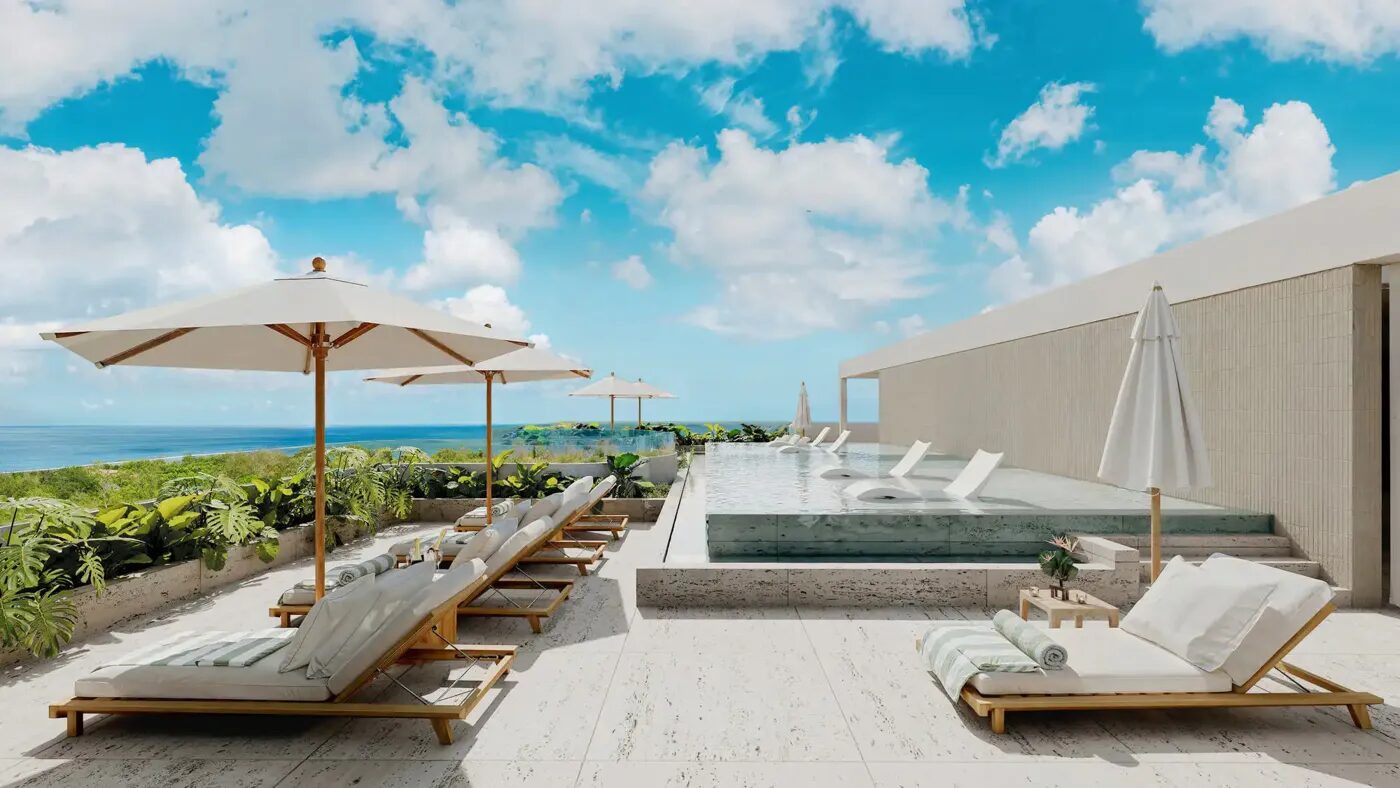
Rarely completely. In Barbados, the view you see on viewing day is only as safe as the land between you and it. Before you buy, find out who owns that land, what the planning rules allow there, whether any covenant or estate rule limits building, and what applications are already in the system. Those answers tell you how likely the view is to last.
Key points
- Assume a view can change unless something specific protects it, and ask your attorney to confirm what that protection is.
- The land in front matters most: a public road, a beach or a cliff edge is very different from an empty private plot.
- Planning decisions are guided by the Planning and Development Act 2019 and the Physical Development Plan, which show what each area is designated for.
- Some estates have covenants or design rules that limit building heights and positions, which can protect views inside the estate.
- Larger projects, such as hotels with 10 or more bedrooms or 20 or more homes, must be publicised before a decision, so you can check what is proposed nearby.
What actually protects a view?
Very little protects a view on its own. What protects it is the land around it. A home that looks over a public beach, a road, a gully or a steep drop is far less exposed than one looking across an empty plot that someone else owns. The first job is to stand on the terrace and ask, for everything you can see: who owns that, and what could they build?
Inside a managed estate, there may be extra protection. Many estates set rules on where houses can sit, how high they can go and what landscaping is allowed. Those rules can be valuable, but only if they apply to the plots that matter and are actually enforced. Your attorney should read them, not just the sales summary.
How do I check what could be built?
Planning in Barbados is handled by the Planning and Development Department. According to the department, decisions are guided by the Planning and Development Act 2019, the Planning and Development (General Development) Order 2021, the Physical Development Plan and its restrictive policies. The Physical Development Plan sets out how land across the island is designated, which gives you a first idea of what a neighbouring plot could be used for.
Bigger schemes are also visible early. The department’s publicity rules require public notice for applications such as hotels with 10 or more bedrooms, 20 or more homes, and development that does not fit the approved plan for the area. Checking current notices near a property tells you what may be coming.
For the plots directly in front of you, ask your attorney to search for planning permissions already granted. A permission that has not been built yet is easy to miss on a viewing.
What should I ask before making an offer?
- Who owns the land between the house and the view, and is any of it for sale?
- What is that land designated for, and has planning permission been granted on it?
- Do estate rules or covenants control heights, building lines or planting, and who enforces them?
- Are trees part of the view, and on whose land do they grow?
- How does the view look from the rooms you will use most, not just from the terrace?
If a view is a large part of the price, these questions belong before the offer, not after.
Mike’s view
A sea view sells a house in minutes, and I understand why. My job is to slow that moment down. When a buyer falls for a terrace, I ask what is between them and the water and whether it will still be empty in five years. Sometimes the answer is reassuring: a road, a beach, a steep slope or an estate rule that holds. Sometimes it is an empty plot with permission already granted. That doesn’t always mean walk away, but it should shape how much the view is worth to you. The decision on price is yours. I just make sure it is based on what can be built, not only on what you can see today.
Related guides
- West Coast Barbados communities compared
- Five decisions to make before buying in Barbados
- The legal process and timeline for buying in Barbados

Mike has lived in Barbados for 10 years and spent more than 25 years in international sales, including as Head of Sales at The Crane Resort and Royal Westmoreland. He acts only for buyers, and you pay no fee because the seller pays the agent’s commission.
Last reviewed November 2026
WhatsApp MikeThis is general information, not legal, tax or financial advice. Confirm the details with your Barbados attorney and your advisers at home.